
John Banville on James Joyce's Dubliners
"If you can put your sins into a good, entertaining and halfway plausible story, you'll get away with it."
19 episodes with John Banville, 16 films and 10 essays.
One membership opens every book on Rebind, not just this one.
 Free film
An Introduction to Dubliners
Walking Blind Streets with John Banville
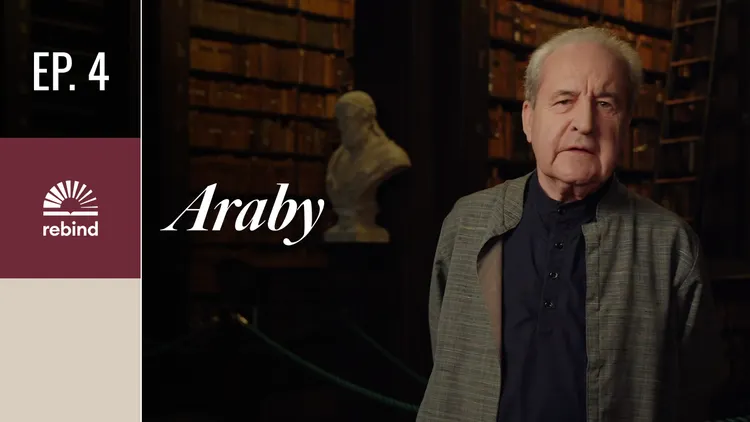
Kaag walks North Richmond Street to ask John Banville about 'Araby' — first love as a private sacrament, and the paralysis it cracks.
Read the introduction →- 2 Three Words on the First Page Episode 2 · 10 min
- 3 Look What He's Doing Episode 3 · 13 min
- 4 The East and the Circles Episode 4 · 13 min
- 5 All the Seas of the World Episode 5 · 9 min
- 6 Young Men on the Make Episode 6 · 13 min
- 7 The Perverse Madonna Episode 7 · 9 min
- 8 The Confession Box Episode 8 · 9 min
- 9 Poor Little Chandler Episode 9 · 11 min
- 10 The Copied Day Episode 10 · 12 min
- 11 The Clay Game Episode 11 · 11 min
- 12 No Blame Attached to Anyone Episode 12 · 12 min
- 13 Hyenas at the Lion's Print Episode 13 · 11 min
- 14 I'm Asking for My Rights Episode 14 · 13 min
- 15 The Lie They Survive By Episode 15 · 12 min
- 16 The Terror of Freedom Episode 16 · 13 min
- 17 The Ribs Beneath the Skin Episode 17 · 12 min
- 18 The Journey Westward Episode 18 · 14 min
- 19 The Standing Stones Episode 19 · 13 min
Join today for every audio series, film and essay on Rebind
JoinGift memberships
Give someone a year of Rebind.
Every audio series, film and essay on the site, sent by email on the day you choose. $79 for the year, nothing renews.
In Conversation With – Where this book meets another
Dublin as a City of the Mind
Kitcher and Banville converge on Joyce's Dublin as a city of the mind: Banville's paralyzed Dubliners, and Kitcher's Bloom, the man who chose freedom.
Go deeper →The Dead and the Yes: Joyce's Two Endings in Mercy
For Banville and Kitcher, 'The Dead' and Molly's 'yes' are the same turn: Joyce ending both Dublin books in mercy, holding the living and the dead together.
Go deeper →The Art of Not Saying It: Joyce and James on the Work of Not Knowing
Joyce's economy and James's late fog reach the same place: characters who work daily at not knowing. Banville and Greenwell map what that refusal costs.
Go deeper →Become What You Are: Joyce, Nietzsche, and the Terror of Self-Creation
Nietzsche demands you become what you are; Joyce shows why most people won't. Banville and Martin read Zarathustra's challenge against Dublin's paralysis.
Go deeper →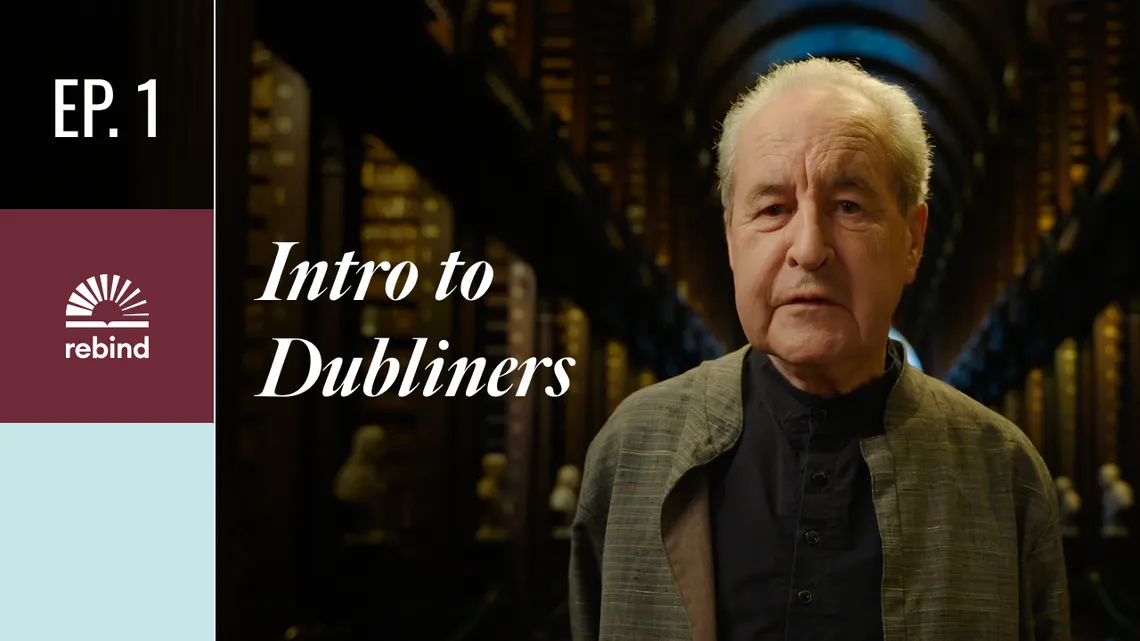
The Questions these books keep starting →
John Banville on "The Dead": Gabriel's Anti-Epiphany in the Snow
In 'The Dead,' Greta's memory of Michael Furey breaks Gabriel's self-image; Banville reads the final snow not as elegy but as Gabriel's poem of selfhood.
Go deeper →Eveline at the Gangplank: Why She Doesn't Board the Ship
Banville reads Eveline's refusal at the gangplank not as failed nerve but as a decision: the escape Frank offers is a Dublin transplanted to Buenos Aires.
Go deeper →Should I Read Dubliners Before Ulysses?
Read Dubliners first: it teaches Joyce's Dublin, his method of the unsaid, and his diagnosis of paralysis — the groundwork Ulysses assumes.
Go deeper →- Was Charlotte Lucas Right to Marry Mr. Collins? Sadie Stein on Jane Austen's Pride and Prejudice
- What Does the A on Hester's Chest Actually Mean? Megan Marshall on Nathaniel Hawthorne's The Scarlet Letter
- Was Thoreau Selfish? The Question of Self-Reliance John Kaag on Henry David Thoreau's Walden
- What Is Kant's Categorical Imperative? Paul Guyer on Immanuel Kant